




Choose how incoming calls are distributed in your queue. With Call Strategy, you decide how calls proceed within the team, ensuring the flow matches your workflow and staffing.
Each queue can have its own strategy. This allows you to create a workflow that ensures the right pace for calls, a more even workload for the team, and a more predictable experience for the caller.
How Call Strategy Works
Once a queue is created, you select the strategy that will govern how calls are distributed within the team. The strategy determines who receives the next call and how distribution occurs among employees.
For example, you can have the call ring for everyone simultaneously, so the first person to answer takes it. In other teams, a fixed order works better, where calls always start with the same person and proceed in turn if no one answers. It’s also possible to have the system distribute calls more dynamically, for example, to the person who has taken the fewest calls during the day.
The strategy is set per queue in Telavox and can be adapted to how the team works. This way, different queues can use different workflows depending on whether it concerns support, sales, or internal matters.
Combine with other Telavox features
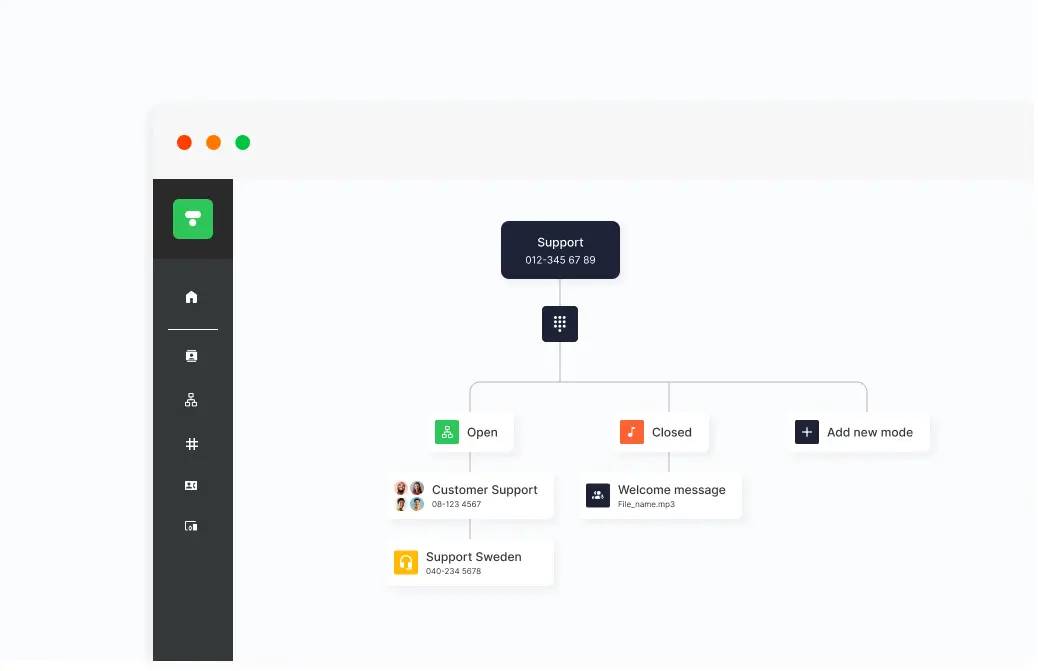
Call Strategy is part of the queue system and works together with several other features in Telavox. For example, button choices (IVR) can direct the call to the correct queue before the strategy takes over and distributes the call within the team.
During high call volumes, features like Callback or delayed answer groups can help manage waiting times and spread calls to more teams. At the same time, availability status, profiles, and pause or wrap-up time ensure that calls are only distributed to employees who are actually ready to take them.
Get started
Build a smarter call flow by combining Call Strategy with other features in Telavox.
Contact Telavox sales, and we will help you find the right strategy and setup for your team.


